 0
 Language
 英语
 阿拉伯语
 德语

Carpet backing is an important part of carpet construction. Although buyers often focus on pile design, color and texture, the backing layer also affects yarn stability, product structure and dimensional consistency. For a Carpet Company, producing suitable backing requires careful material selection and control over several manufacturing processes.
What Materials Are Used in Carpet Backing?
Backing materials vary according to carpet construction and intended application. Common options include:
- Polypropylene: Widely used in primary backing fabrics for tufted carpets.
- Jute: Found in traditional carpet constructions and selected backing applications.
- Polyester: Used in woven and nonwoven backing fabrics.
- Felt: Provides a soft underside structure in certain carpet products.
- Polyurethane foam: Used in products requiring additional cushioning.
Material selection depends on the relationship between the backing and face yarn. Manufacturers also need to consider material compatibility during coating and bonding operations.
Primary and Secondary Backing Have Different Roles
Tufted carpets commonly use two backing layers.
Primary backing is the fabric into which yarn is inserted during tufting. It holds the yarn in position and provides the foundation for pile formation.
Secondary backing is attached to the underside after tufting. It adds structural support and helps maintain the overall carpet construction.
Not every carpet uses both layers. Woven carpets, for example, integrate yarns into their structure during weaving, resulting in a different backing design.
How Does the Backing Coating Process Work?
Coating is an important stage in tufted carpet production. After tufting, adhesive is applied to the underside to secure the yarn and prepare the surface for additional backing materials.
A typical process includes:
- Surface preparation: Checking the carpet underside for loose fibers and visible defects.
- Coating application: Spreading a controlled layer of adhesive across the backing.
- Layer bonding: Attaching secondary fabric when required.
- Curing: Applying controlled heat to develop bonding strength.
- Cooling: Allowing the carpet structure to stabilize before finishing.
Latex-based compounds are commonly used in this process. Coating thickness and distribution require attention. Too little adhesive may weaken tuft retention, whereas excessive application can increase product weight and affect flexibility.
For a Carpet Company, coating equipment settings, material viscosity and production speed need to work together.
What Problems Can Occur During Backing Production?
Several production issues can affect backing quality:
- Uneven coating: Inconsistent adhesive distribution may cause differences in bonding strength.
- Layer separation: Poor adhesion between primary and secondary backing can cause delamination.
- Material distortion: Temperature changes and uneven tension may cause shrinkage or stretching.
- Uneven thickness: Variations in coating or substrate thickness can affect the carpet's overall structure.
Production teams need to examine raw materials, equipment settings and processing conditions to identify the causes of these problems.
How Does Backing Design Change Across Applications?
Different carpet applications require different backing structures.
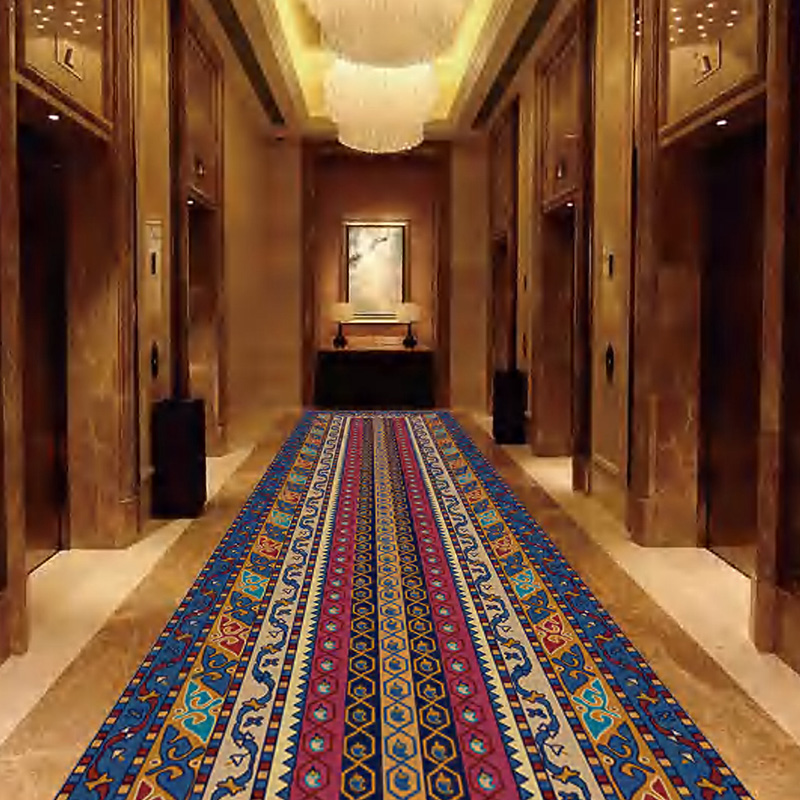
Hotel corridors and office spaces may require backing designs that support dimensional stability under repeated foot traffic. Residential carpets may use different combinations of materials to achieve a particular level of flexibility and underfoot feel.
Carpet tiles have additional structural requirements. Their backing needs to support individual tile dimensions and maintain consistency during cutting and installation. Depending on the design, manufacturers may use PVC, bitumen or other backing systems.
When developing custom products, a Carpet Company needs to consider pile structure, backing material and bonding methods together rather than treating them as separate specifications.